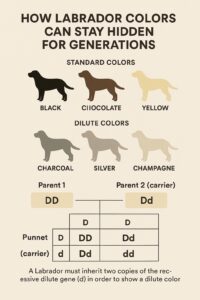

In Part 1, we established that the dilute gene is a normal recessive color gene, not a defect — and that health and ethics are determined by breeding practices, not pigment.
Part 2 addresses the question critics often raise:
“How does breeding dilutes improve the breed?”
Here are the clear, evidence-based answers.
1. Improvement Through Health Prioritization
Many dilute breeders emphasize health testing more rigorously than traditional color breeders because they must constantly defend their legitimacy. As a result, dilute lines often feature:
• Excellent or Good OFA hips
• Normal elbows
• Clean DNA panels
• Lower inbreeding coefficients
• Detailed records on temperament & structure
In comparison, many standard-color breeders still pair:
• Fair hips to Fair hips
• Good hips to Borderline elbows
• high-allergy lines
• temperament-questionable dogs
The OFA statistics show this clearly: poor orthopedic pairings occur far more often in standard-color litters than in dilute programs.
When dilute breeders prioritize health across the board, they actively strengthen the Labrador gene pool.
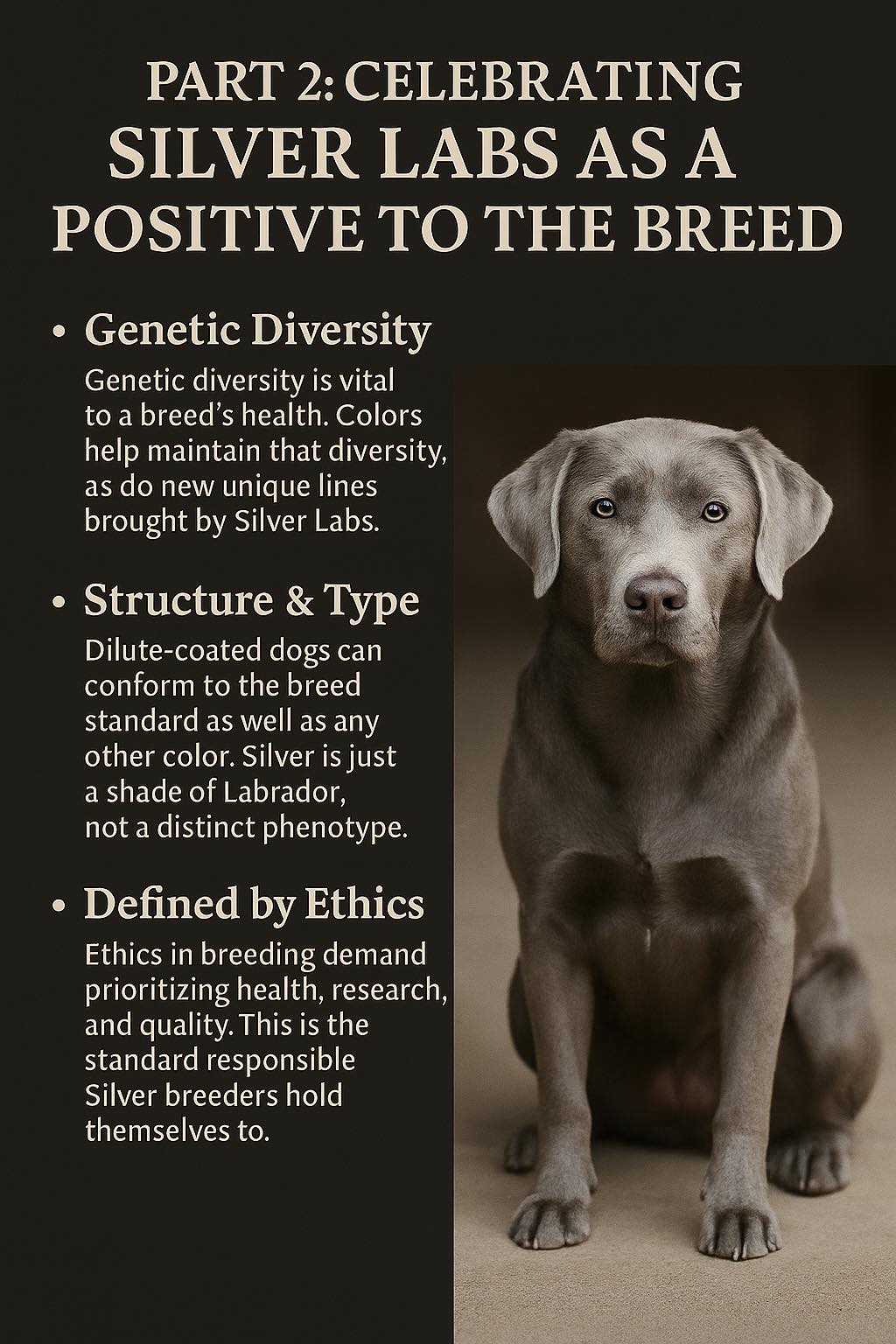
2. Improvement Through Genetic Diversity
Standard color programs — especially show lines — are often tightly linebred to preserve specific looks. While linebreeding is not inherently bad, overuse reduces genetic diversity and concentrates recessive diseases.
Dilute lines introduce:
• wider outcross opportunities
• lower COI percentages
• fresh genetic combinations
• reduced risk of recessive disease pairing
Genetic diversity is one of the most foundational principles of breed improvement.
Dilutes contribute to that diversity.
3. Improvement Through Structural and Temperament Goals
Responsible dilute breeders focus on:
• balanced structure
• strong bone
• correct toplines
• Labrador head type
• stable, gentle temperament
Many dilute lines today meet — or surpass — the structural quality of numerous standard lines that are increasingly bred for the extreme “blocky head” market or overly slender field extremes.
Dogs built to work, move, and live healthy lives create improvement.
Dilute breeders committed to type and temperament play a key role in preserving the classic Labrador.
4. Improvement Through Transparency and Accountability
Dilute breeders are scrutinized more heavily than any other color group.
This has produced a culture of:
• transparency with buyers
• open discussion of coat/skin management
• proactive health screening
• honest assessment of litters
• long-term follow-up support
Many breeders of standard colors operate with far less accountability simply because their color is widely accepted.
Accountability improves the breed.
Dilute breeders often demonstrate above-average accountability.
5. Improvement Through Expanding Public Understanding
Silver, champagne, and charcoal breeders actively educate buyers about:
• genetics
• responsible breeding
• color inheritance
• signs of unhealthy breeding
• what “ethical” actually means
• the difference between “color preference” and “quality”
This education raises the overall sophistication of Labrador buyers, which reduces:
• puppy mill demand
• impulse buying
• untested backyard breeding
• misinformation
Better buyer understanding = a healthier breed future.