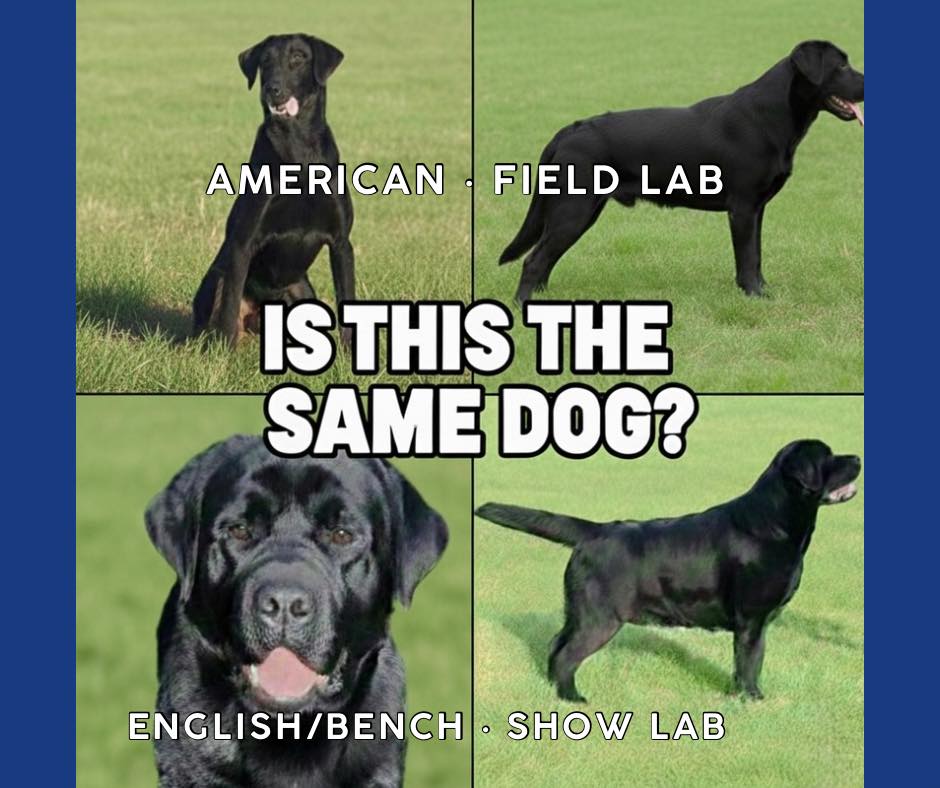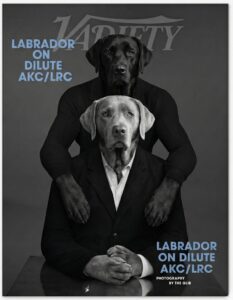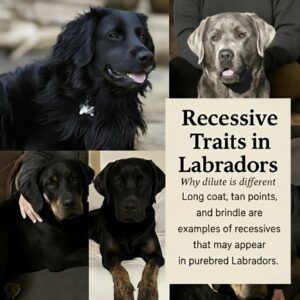

Is this the actual same dog? in addressing the silver Lab color debate. We often see a barrage of accusations that that doesn’t look like a Labrador but what does a Labrador look like ?
Here is anothr open Letter to the American Kennel Club on Breed Fragmentation and the Loss of the Total Dog.
To the leadership of the American Kennel Club and the broader fancy,
We have another problem. And this time, we are not talking about color. It is deeper than that. It is a crisis of identity that is quietly fracturing many of our most beloved breeds down the middle.
Consider the Labrador Retriever. Place a top-tier Field Trial Labrador next to a top-tier Conformation Labrador, and the average person would struggle to believe they belong to the same breed. One is built like a lean, high-octane endurance athlete. The other is built like a heavy-boned powerlifter.
This divergence is not the result of bad actors or ill intent. It is the predictable outcome of a system that rewards specialization over integration.
The Great Divergence
In Labradors, and in many other breeds, the split occurred because the incentives split. We stopped asking our dogs to be total dogs and started asking them to be specialists.
In the field, selection pressure rewards raw speed, extreme marking ability, and sustained intensity. The result has been the production of high-drive dogs that excel in competition but often lack an off switch for the average home. These dogs are not bad dogs, but they are frequently mismatched to modern family life.
In the show ring, selection pressure rewards heavy bone, broad heads, and movement that appears correct at a trot. Over time, this has produced dogs that are beautiful representations of type but may lack the endurance, efficiency, or desire to perform the work their breed was created to do for a full day in the field.
Neither direction is wrong in isolation. Both, however, are incomplete. When selection favors one side at the expense of the other, we lose the essence of the breed.
A Systemic Issue Across the Registry
This is not unique to Labradors. It is a structural problem visible across the AKC roster.
German Shepherd Dogs present perhaps the clearest example. Show lines emphasize extreme angulation and outline, while working lines emphasize nerves, drive, and utility. The two populations are now so far apart that they function as different animals despite sharing a written standard.
English Springer Spaniels show a similar divide. Bench types are heavier and lower energy, while field types are smaller, faster, and intensely driven. On paper they are the same breed. In practice they rarely intersect.
Border Collies serve as a cautionary tale in the opposite direction. The working community resisted AKC conformation for decades to protect the dog’s functional integrity. The result is a working dog that remains largely intact, but a breed that is culturally divided.
These examples point to the same conclusion: when function and form are evaluated separately, divergence is inevitable.
The Missing Total Dog Metric
The core problem is that the current AKC structure lacks a single venue that meaningfully requires all three of the following:
1. The dog must look like the breed.
2. The dog must work like the breed.
3. The dog must live like the breed.
Conformation shows do not test function. Field trials do not test adherence to breed type. Hunt tests measure minimum competence, not excellence. Without a forcing function that ties structure, temperament, and performance together, breeders will continue to optimize for the scoreboard they are playing on.
We catch glimpses of what is possible in breeds such as the German Shorthaired Pointer, where Dual Champions remain respected and field performance is still culturally valued by show breeders. But in many of our most popular breeds, we have quietly accepted fragmentation as normal.
The Uncomfortable Truth
The Labrador Retriever standard already describes a total dog. The problem is not the standard. The problem is that the system no longer rewards producing it.
When function is optional, form drifts into exaggeration.
When form is optional, function drifts into unrecognizable shapes.
When neither is enforced together, the breed fragments.
These breeds were not created as ring artifacts or trial machines. They were developed as durable, versatile working companions expected to perform their purpose and live alongside people. That heritage is at risk when incentives reward extremes rather than balance.
A Call to Action: Closing the Gap
If we care about the long-term integrity of our breeds, we must be willing to change the rules of the game.
I am calling on the AKC and the Parent Clubs to consider the following:
1. Mandate Meaningful Performance for Conformation Titles
A breed champion should be required to demonstrate functional ability relevant to its purpose. Retrievers should retrieve. Herding dogs should move stock. Sporting breeds should prove endurance and utility.
2. Elevate Temperament and Balance Through a True Total Dog Recognition
Create awards that carry more cultural weight than Best in Show and explicitly reward dogs that demonstrate correct type, sound temperament, and real-world functionality.
3. Modernize Judging Standards Across Venues
Penalize exaggerations in the conformation ring that would hinder a full day’s work. Likewise, discourage off-type or structurally unsound builds in performance venues that ignore the breed standard entirely.
To breeders across all disciplines: we have allowed winning to quietly replace improvement as the primary goal. The challenge before us is to reclaim the middle ground and once again breed dogs that could have done it all fifty years ago.
Until ribbons are tied to real work, we are not breeding to improve. We are breeding to win. And the dogs are the ones absorbing the consequences.
If you agree, share this letter. It is time to start the conversation our system has been avoiding.