
From Chocolate to Dilutes: How Labrador History Repeats Itself
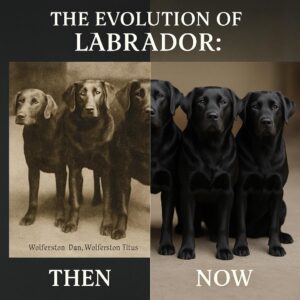
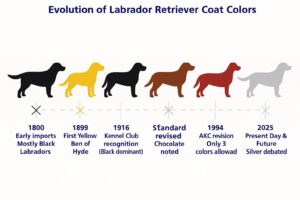
For decades, the Labrador Retriever was known only in one acceptable color — solid black. Early sportsmen and gamekeepers prized uniform dark coats for work in the field, and any deviation was quietly dismissed as undesirable. Yet hidden within those famous bloodlines were genetic surprises waiting to surface.
The Secret Arrival of Chocolate – 1892
In 1892, on the Buccleuch estate in Scotland, two brown pups were born among traditional black Labradors. These were the early chocolate Labradors, the result of a recessive gene that had quietly existed for generations. They were not new, and they were not crossbred — they were pure Labrador.
But acceptance did not follow their appearance.
For nearly sixty years, chocolate Labs lingered in the background, occasionally used but rarely promoted. Many breeders culled or concealed them, believing only black dogs maintained the breed’s integrity.
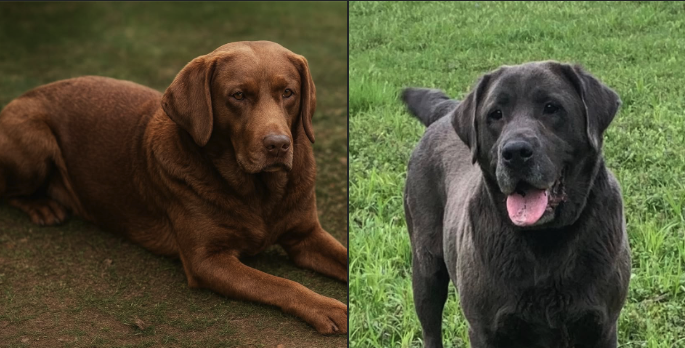
 The Chocolate Legacy
This dog represents what was once considered an “off-color” — today, it’s a beloved and recognized variety.
A Modern Echo – The Rise of Dilute Labradors
Today, the Labrador world faces a familiar debate with dilute colors:
• Charcoal – dilute black
• Silver – dilute chocolate
• Champagne – dilute yellow
Just like chocolates and yellows before them, dilutes emerged when hidden genes met matching pairs. DNA testing now confirms these dogs descend from long-established Labrador lines — not from outside crosses.
The Dilute Descendant
Where some see controversy, others recognize the same story repeating — a rare genetic expression, not an impurity.
A Lesson from Labrador History
Every major color in the Labrador breed began as an exception — questioned, doubted, and resisted. Over time, the breed’s richness was not diminished by color variation… it was enhanced.
What once lived in the shadows of controversy often becomes part of the breed’s celebrated legacy.